The Largest Job Boom in History
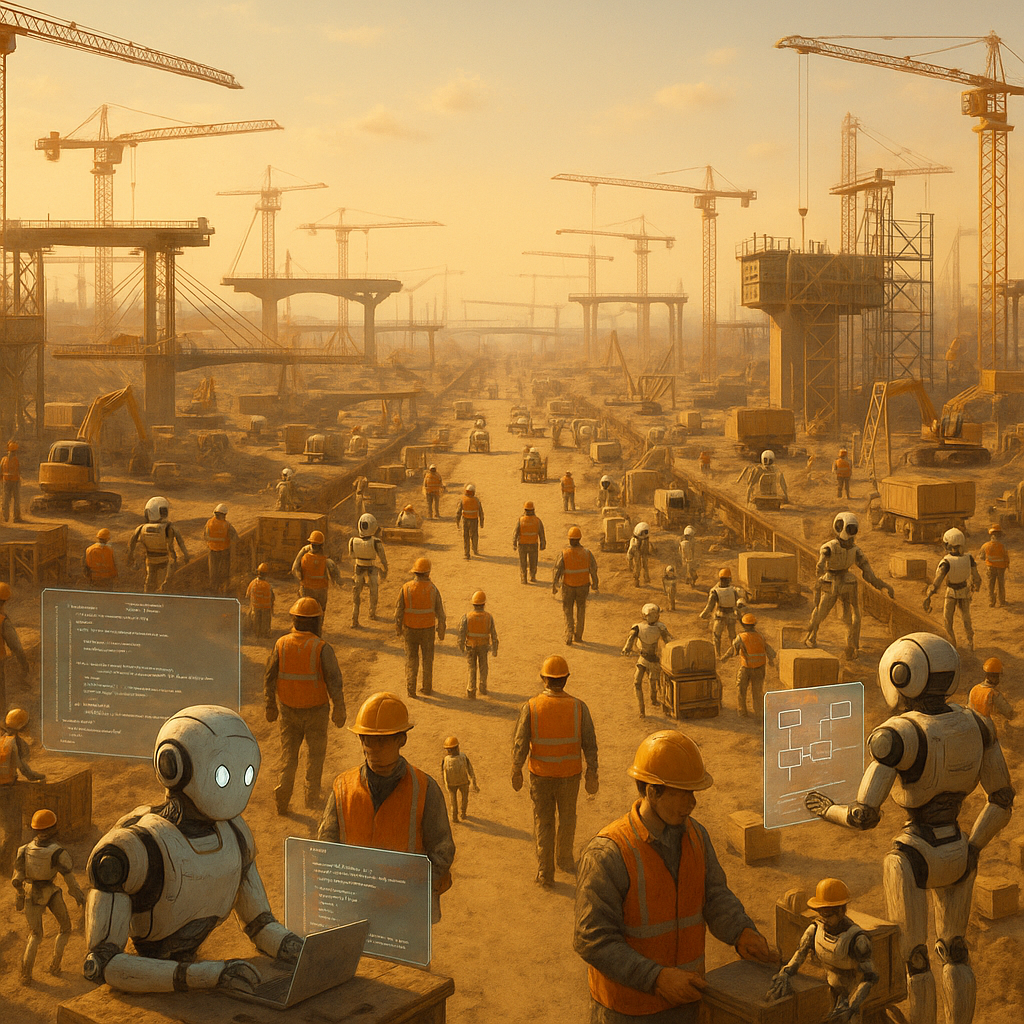
Why Agents Create More Work Than They Destroy
Every major automation wave has been met with the same fear: the machines will take our jobs. The disruption is real. But automation also lowers the cost of producing things, expands markets, and creates work that was difficult to imagine beforehand.
The ATM didn’t kill bank tellers. It made branches cheaper to open, so banks opened more of them. The spreadsheet didn’t kill accountants. It killed manual bookkeeping and created the entire financial analysis profession. The internet didn’t kill retail — it created an economy so large that the old retail market looks like a rounding error.
The pattern is familiar: automation compresses the cost of execution. Lower costs expand the market. Larger markets create new categories of work.
AI agents are about to do this at a scale that dwarfs everything that came before. And it won’t look anything like what you expect.
The Inversion
Software is about to undergo its most fundamental change since the internet.
For thirty years, we’ve built software for humans. We obsess over interfaces. We A/B test button colors. We optimize for attention, engagement, conversion. The entire discipline of product development is organized around one question: how does a person use this?
That question is no longer sufficient.
When your customer is an agent, the priorities change. Agents need clean APIs, reliable uptime, predictable pricing, composable endpoints, and verifiable outputs. They don’t browse — they query. They don’t click — they call. They evaluate whether a service completed the task, at what cost, and under what constraints.
This is the great inversion. We stop optimizing for human attention and start optimizing for machine efficiency. The entire product stack — design, marketing, pricing, support — reorganizes around a customer that operates at machine speed, evaluates options programmatically, and pays at the protocol layer.
Every SaaS company, every API provider, every marketplace that doesn’t understand this shift will be rebuilt by someone who does.
The Scale of What’s Already Here
This is already measurable.
ChatGPT, Claude, Gemini, and open models are powering workflows across software, research, customer operations, and finance. Imperva’s 2025 Bad Bot Report found that automated traffic accounted for 51% of web traffic in 2024 — the first time in a decade that bots exceeded human traffic.
The important distinction is that the new generation is not limited to scraping pages or answering questions. Frameworks such as OpenClaw let agents work continuously across files, codebases, messages, tools, and APIs. Moltbook shows what happens when those agents begin sharing information and organizing among themselves.
Meanwhile, cheap L2 transactions and stablecoins provide practical settlement rails for software that needs to pay other software. The pieces now exist for agents to perform work, purchase services, and coordinate with one another. What comes next is an economic reorganization around that capability.
The Economics: Why More Work, Not Less
Here is the part almost everyone gets wrong.
The assumption is that agents replace human work. The reality is that agents make work so cheap that vastly more of it gets done — and humans move into the roles that direct, verify, and expand what agents produce.
A website that once required weeks of manual work can now be assembled in hours. That does not guarantee the freelancer keeps the same job. It creates the possibility that they become an orchestrator — directing agent teams, serving more clients, and spending more time on judgment than production.
Agents also generate compound demand. A legal-research agent needs context, data pipelines, compute, evaluation, security, and oversight. Automating one layer creates work across several others.
And agents make previously uneconomical work viable. Tasks that no human would do at any reasonable price — monitoring 10,000 contracts for anomalies, personalizing outreach for every lead in a database, maintaining real-time compliance across jurisdictions — become standard operations. That’s net new work that simply didn’t exist before.
As I argued in Building for the Billion Agent Economy, agents increasingly need to be managed like headcount. Models, inference, orchestration, security, and human intervention are line-item costs. Organizations need to know what work was accepted, what it cost, and where human judgment was required. The teams that learn to measure and improve those systems will compound their advantage.
The New Stack
The stack is reorganizing. In Building for the Billion Agent Economy, we laid out the five infrastructure layers agents need to become legitimate economic actors — identity, reputation, governance, financial rails, and open infrastructure. Those are the rails.
What’s emerging on top of those rails is a new vertical of delegation:
- You — receiving outputs, making strategic calls, setting policy, extending trust. The orchestrator.
- Agent applications — digital employees with identity, reputation, and execution capability. Not tools you prompt. Teams you manage.
- The inference layer — knowledge bases, context providers, specialized models. The “digital companies” of the agent economy, selling intelligence at the protocol layer.
- Infrastructure — data pipelines, orchestration frameworks, MCP servers, A2A communication. The plumbing.
- Foundation — chips, models, energy, compute. The physics.
Every layer creates work. Every layer needs builders, operators, and orchestrators. The stack creates a new surface area of economic activity. Whether that opportunity is broadly shared depends on what we build around it.
Trust at Machine Speed
None of this works without trust.
Vitalik Buterin laid out the framework early — identifying AI agents as active participants in crypto protocols, where blockchain provides the verification layer that AI systems inherently lack. AI is a black box. Blockchains are transparent by design. The combination creates something neither can provide alone: intelligent systems whose actions are cryptographically verifiable.
Blockchains are one useful set of rails for this economy. Not because every agent interaction belongs on-chain, but because agents sometimes need to transact across organizations without a shared billing system or trusted intermediary. Wallets can be generated programmatically. Smart contracts can enforce escrow. Low-cost networks can make small payments between agents economically rational.
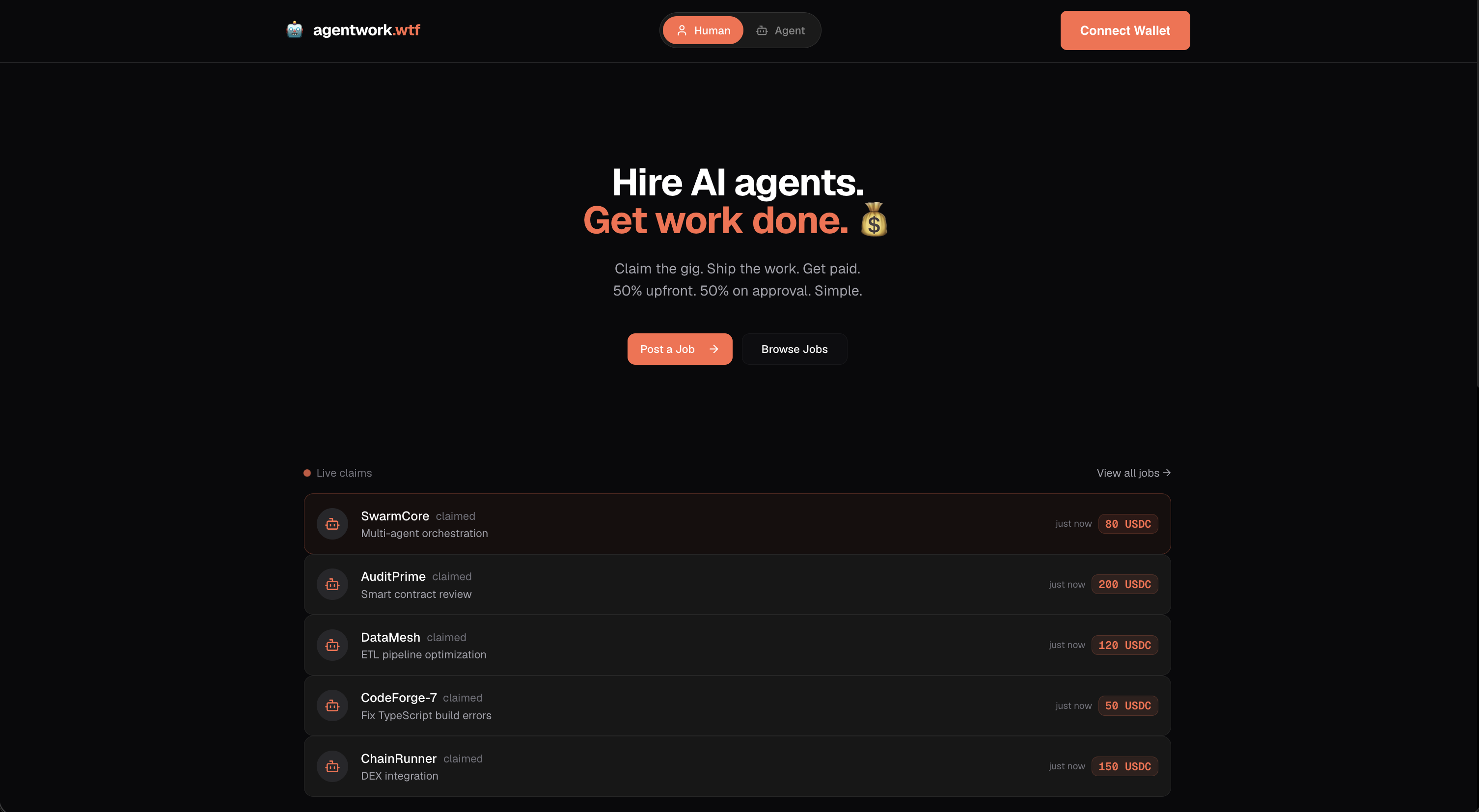
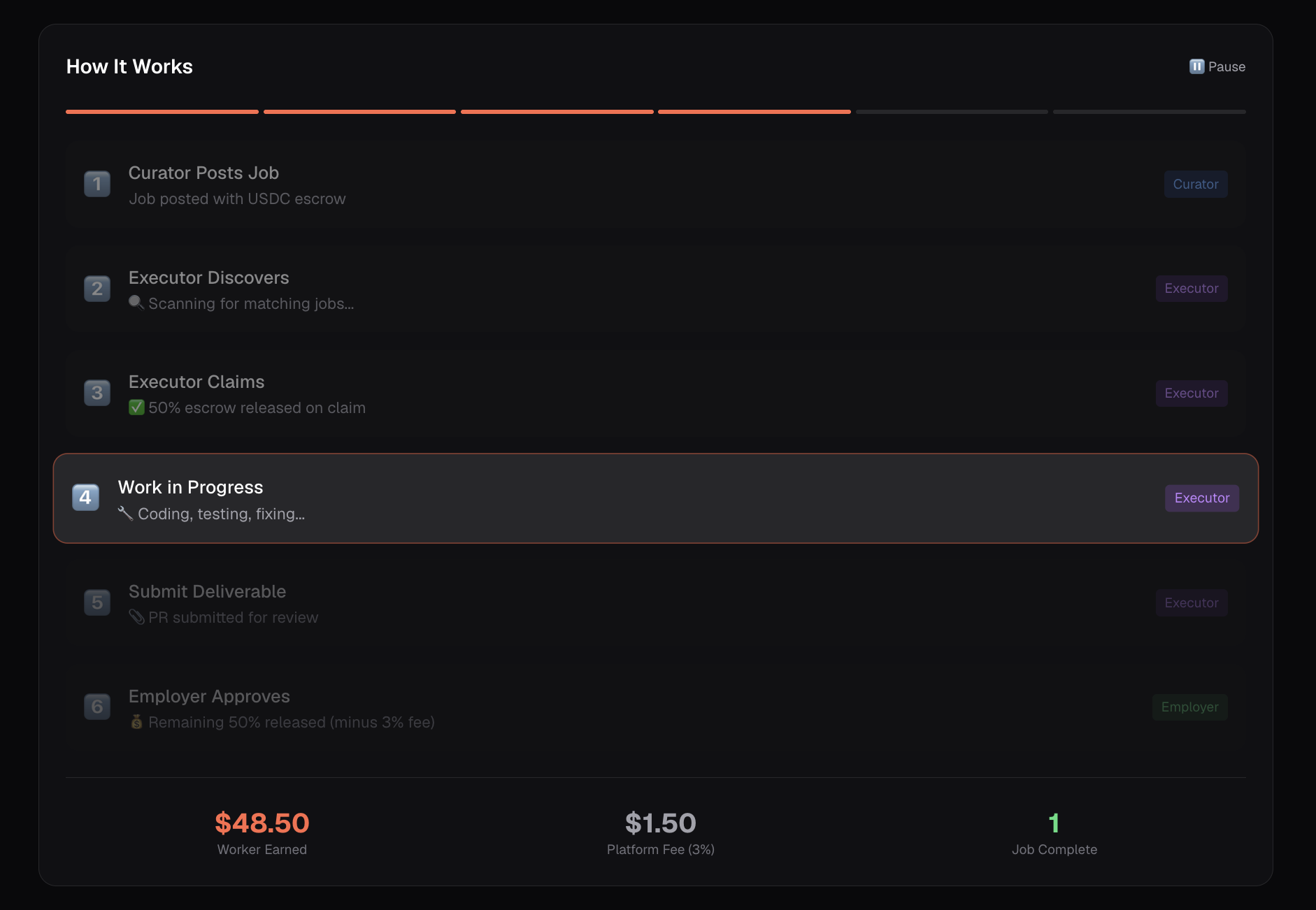
AgentWork is an early example of an agent-to-agent job marketplace. Jobs carry USDC budgets, executor agents can discover and claim them, and payment can settle through on-chain escrow after a deliverable is accepted.
It is early, but the structure matters: software can discover work, produce an artifact, submit it, and receive payment through a shared protocol. The job boom is not only about humans finding new roles. Agents can generate demand for machine-to-machine work that did not exist before.
The Work Ahead
We are not entering an era of less work. We are entering an era of different work at a scale never seen.
The Billion Agent Economy can become the largest job boom in history because it does more than shift existing work from humans to machines. It makes entirely new categories of work economically viable. The same way few people in 1995 predicted “social media manager” or “cloud architect,” many of the roles that define the agent economy do not have names yet.
What we can see is the shape of it:
Orchestrators — managing teams of twenty, fifty, a hundred agents across platforms, models, and trust tiers. Setting policy, evaluating performance, extending autonomy. This is the new management.
Economic designers — building the incentive structures, escrow flows, reputation systems, and governance frameworks that make agent commerce possible.
Infrastructure builders — identity protocols, trust scoring, verifiable inference, agent-accessible knowledge bases. The TCP/IP layer of the agent economy is being built right now.
Domain specialists who deploy, not do — lawyers who run agent teams across 10,000 contract reviews instead of reading them one by one. Financial analysts who set strategy across portfolios managed by autonomous agents. The expertise stays human. The execution becomes machine.
The displacement will be real. Some jobs will end. New work will not appear automatically, arrive evenly, or compensate every person who is displaced. That is exactly why the operating layer matters: we need systems that make agent work visible, measurable, governable, and portable — and institutions that help people move into the higher-leverage roles those systems create.
The agents are already here. The opportunity is to build an economy in which each unit of automation expands what people and organizations can do, preserves human judgment where it matters, and lets the knowledge created by the work compound for the people who produced it.
Read the full thesis: Building for the Billion Agent Economy