The Gaia Ecosystem is Evolving
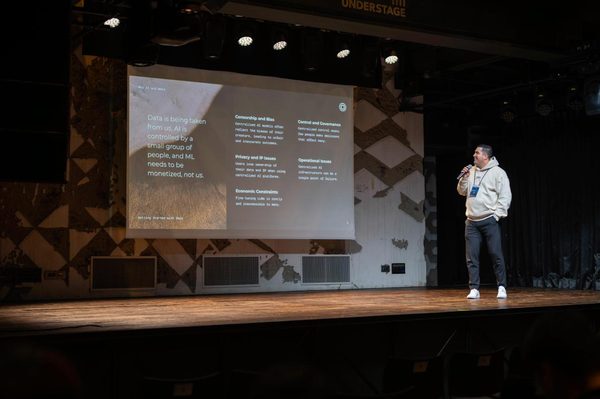
The founding team — Sydney Lai, Shashank Sripada, and I — have resigned our operating roles at Gaia Labs (SayShell Ltd.). I have not sold a single token. I’m staying on as an advisor, and I believe in this network as much as I did the day we joined.
A Change in Governance
I’ll be straight about the why: it came down to governance, and to alignment.
We had a clear product plan and a clear view of how to resource product and GTM. The team wasn’t fully aligned on it. We wanted to put our heads down and build the open-source roadmap we believed in. When the people building and the people steering the entity disagree on where focus and resources go, you either resolve it or make a clean break.
We tried to resolve it, and we kept showing up while we did. None of us has been paid since October. Through all of it, we did our best to work through the issues these changes created — sitting with the partners, vendors, and stakeholders who needed answers, and getting them those answers even while we were chasing the same ones ourselves. We did that because people trusted us, and that was worth honoring.
In the end, the honest move was to step back and let the people who own the entity set its direction.
The original deal was sound: a clear open-source product vision and a clean division of labor — our partners driving market capture and commercial momentum while we did the hard engineering. And it worked. The product shipped, it ran at real scale, and the nodes are open source today.
What we couldn’t align on was where the Labs went next and how its resources were allocated. We wanted product. That’s the difference that led us out.
This is the moment to draw clean lines between three things that had been tangled together. The Gaia Foundation stewards the open-source protocol and the token treasury. Gaia Labs (SayShell Ltd.), under ByteTrade, manages the token, cap table, investor communications, and exchange engagement, and is leading the restructuring. Commercial execution sits with EVM Systems — the same core team, the commercial arm for Gaia — which activates once the Foundation has the capital to fund it. It’s the separation Aragon and Gnosis made as they matured: not a rupture, just the right architecture for the next stage.
For investors, their investment terms and rights are unchanged. For token holders, there will be a future for Gaia — the team is now restructuring for the next phase of the project. I’m still a stakeholder, no bridges burned, and I still want this protocol to win.
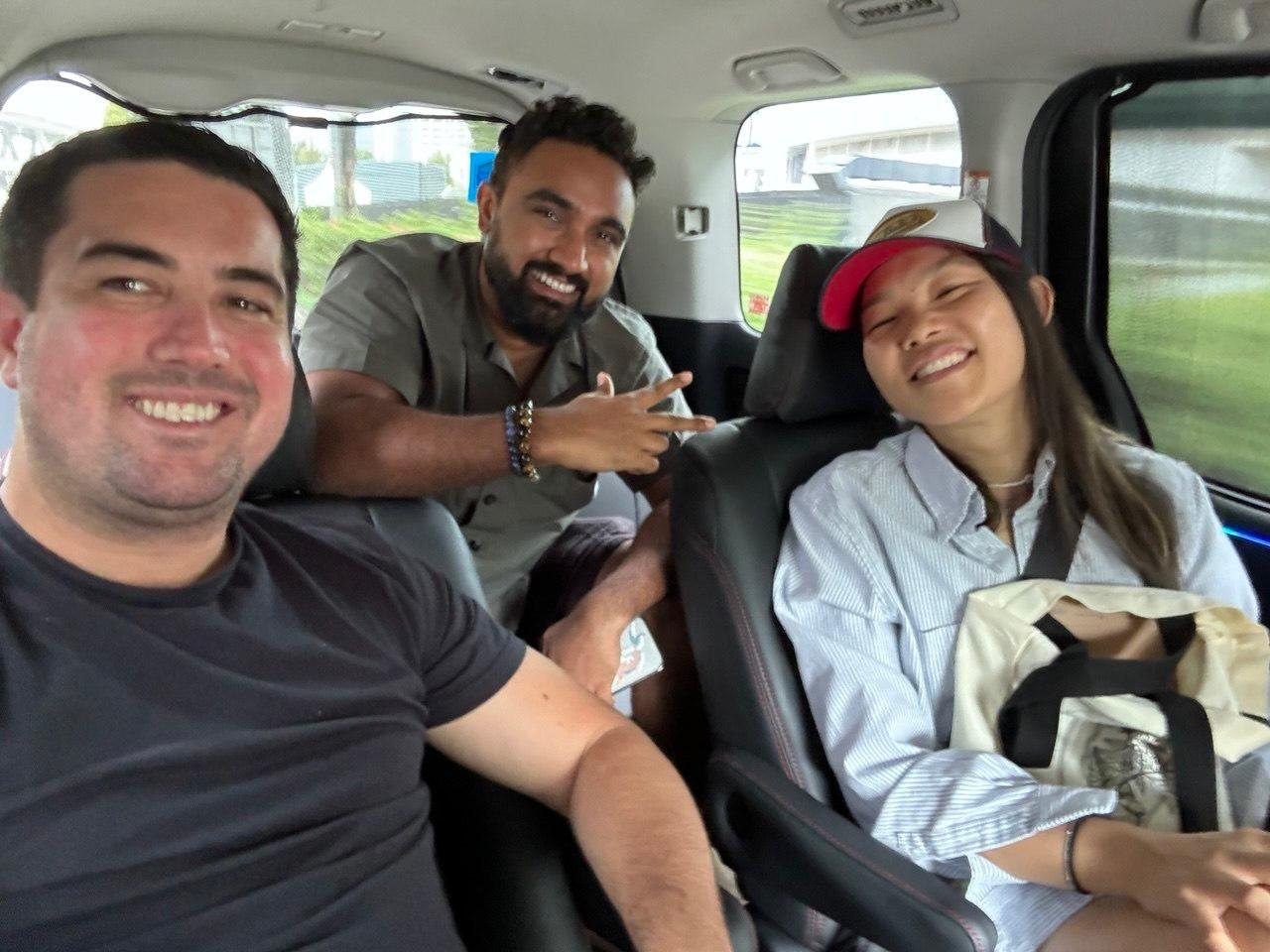
The founding team on the road.
Here’s the context, because the change doesn’t mean much without it.
When we started Gaia, my co-founders and I were focused on the future of work. Across web3, people were building internet-native governance, automated payment for output, digital identity, and reputation based on timestamped credentials.
The ideas were elegant; the implementations were often bureaucratic and messy. But we eventually saw what these systems were really suited for: a machine economy. Governance, payments, identity, reputation, and coordination are exactly what AI agents need to exchange compute, data, intelligence, and context.
We just hadn’t said it out loud yet.
Where It Started
This began in the fall of 2023. By ETH Denver in February 2024 we’d decided to jump in as co-founders with the team that had been incubating Gaia. By May 2024, we were full-time on the future of the decentralized AI ecosystem.
The first product was the Gaia node — an agent, and more than an agent. In 2024 it was an open-source container you could deploy on your own machine in under five minutes from the CLI: a packaged vector database, a RAG pipeline, a prompt manager, an API server so any permissioned party could talk to it, and an integration layer for any of the roughly 2 million open-source models on HuggingFace. The catch was that training the RAG by hand still took days.
The Gaia node was early, and almost nobody understood it at the time. This was pre-Eliza, pre-OpenClaw, pre-Hermes — the harnesses that make it obvious simply didn’t exist yet. Now they do. With OpenClaw, Hermes, and XO (beta.xo.builders), you can one-click a Gaia node from a text message and train its knowledge base the same way, over text. The part that gets interesting is what you build on top of that runtime: private, permissioned, and external-facing environments where agents share context strictly on your terms.
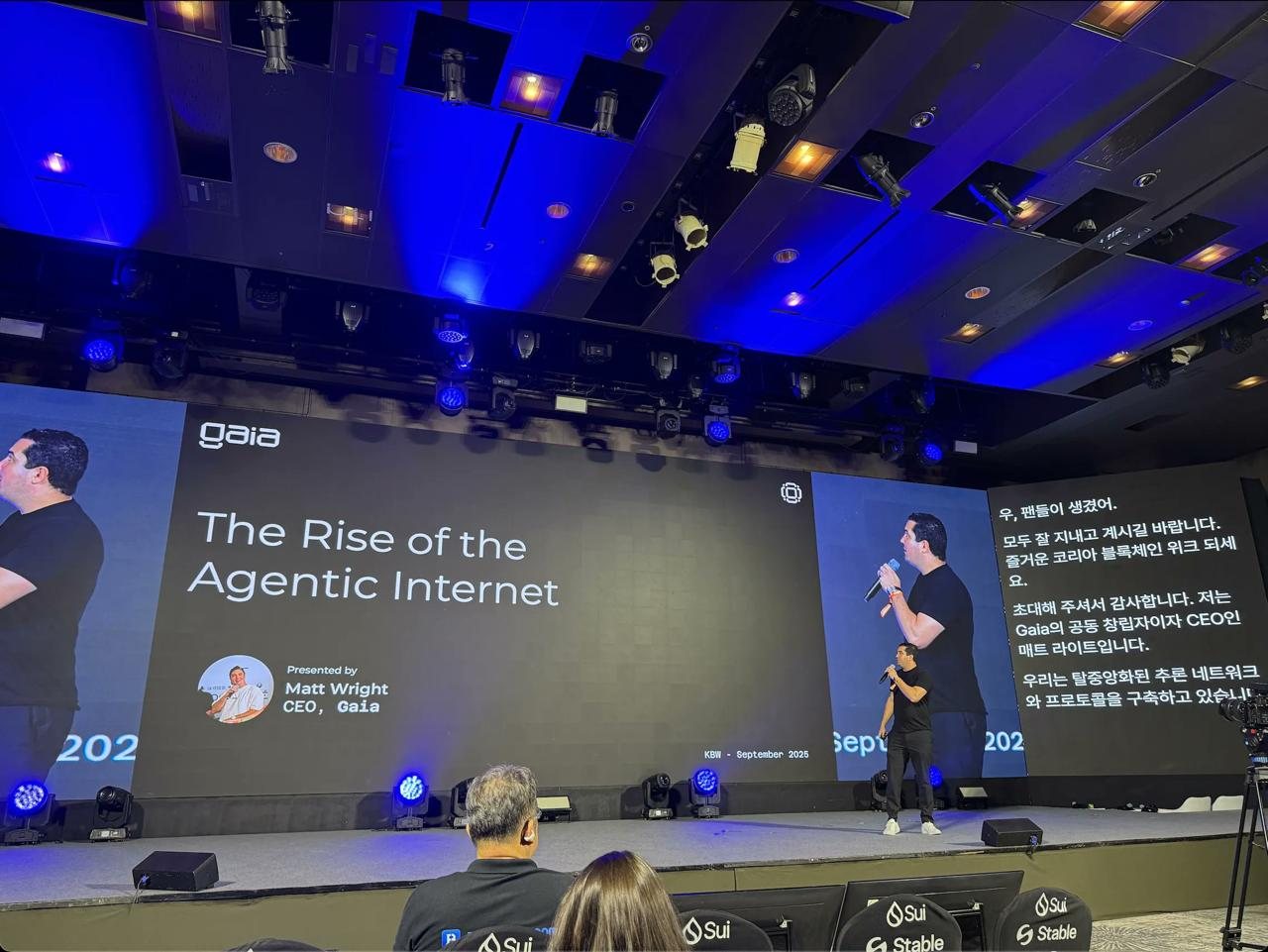
Presenting “The Rise of the Agentic Internet” at Korea Blockchain Week in September 2025.
If you want to help build that open-source future with the Gaia ecosystem, my DMs are open. Happy to guide folks to the proper channels.
What We Executed
It’s worth pausing on what this team actually accomplished, because none of it was inevitable and all of it was earned.
Taking the Gaia thesis into the market.
Scale & infrastructure
• 710,000+ active nodes across consumer, edge, and cloud
• 30+ trillion real inference requests processed at production scale
• Delivered EdgeOS, Console, and core infrastructure tooling for deploying and routing inference
• Built at a fraction of the capital our peers (TAO, Ritual, Gensyn) needed to reach comparable scale
Token, governance & identity
• Publicly announced a $20M raise
• Launched the $GAIA token and established a liquid market across major exchanges; listed on KuCoin, Kraken, and Bitget
• Stood up the Gaia Foundation, DAO, delegates, and Security Council, with on-chain vesting
• Designed and finalized the GAIA staking architecture
• Launched Gaia Domains (~3,000 shortnames) as a persistent identity layer
Product, partners & reach
• Developed consumer hardware — the Gaia AI Phone on Samsung Galaxy S25
• Completed 110+ strategic integrations across wallets, L2s, agent frameworks, and payments (Coinbase, Base, EigenLayer, Recall, OpenLedger, and more)
• Built a community of 437K+ social followers, 160K on Discord, 166K on Telegram, and 2.9M+ website users
• Activated a global network of 65+ ambassadors
• Featured in Forbes, Cointelegraph, and Analytics India Mag as a leading voice in decentralized AI
That foundation is the thing everything else stands on.
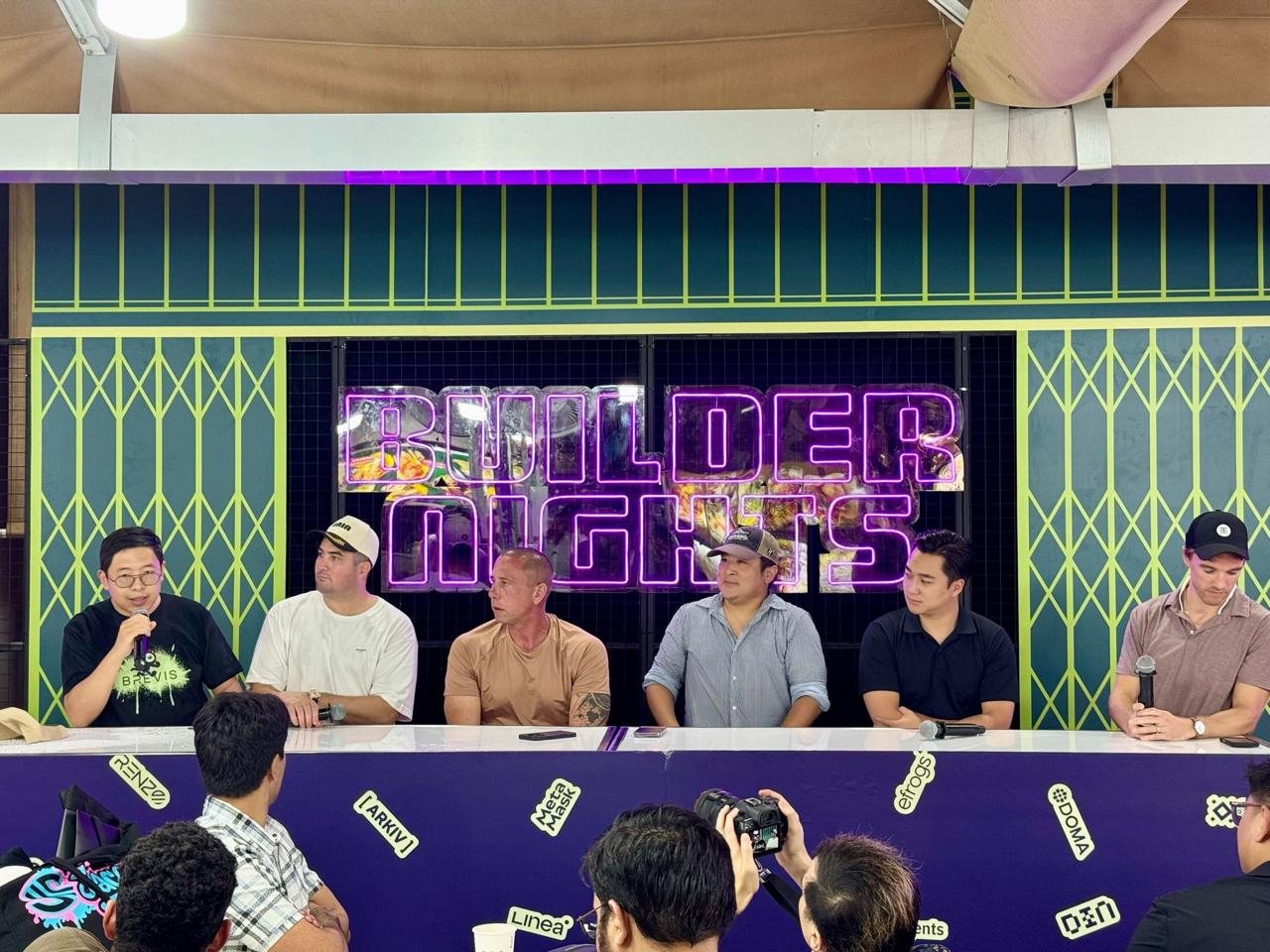
Building the ecosystem in public, with developers and partners around the world.
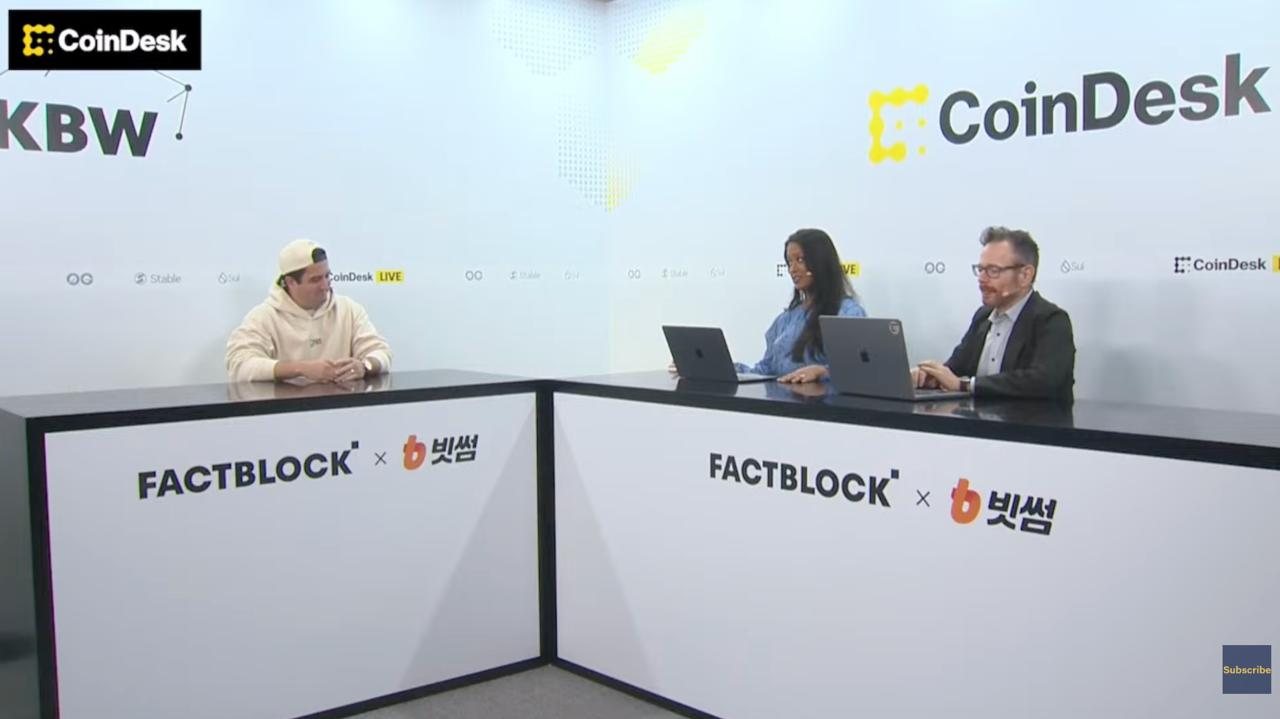
Discussing Gaia with CoinDesk at Korea Blockchain Week.
What’s Next for Gaia
The network is in steady hands. With the restructuring underway, the ByteTrade team continues to build — including Olares, their sovereign hardware platform — and the network keeps running.
Whether the Foundation decides to move forward on Gaia v2 is currently left as an open proposal.
On the Gaia AI Phone
I want to address this directly. We made the call to roll it back. Shipping hardware halfway is worse than not shipping it at all, and the people who pre-ordered deserve better than that.
The Labs, under its current ownership, has taken on the device refunds and is working with the partners involved to make pre-order buyers whole.
What we’re leaving behind is open: we’re releasing Gaia Edge OSS — the on-device local inference and agentic-skills software we built — so it can run on millions of devices across many hardware partners instead of being locked to one SKU. The software belongs to the community now. That’s what “open” actually means in practice. It costs us something, and it’s still the right call.
What the Future of AI Looks Like
Fast forward to 2026. AI is going parabolic, and it is getting harder to tell whose data is whose. It can be difficult to keep pushing the open-source argument when frontier models are this capable and keep disrupting vertical after vertical. But that has always been the tension. Closed and open systems will coexist: massive frontier models with serious compute, open local models on edge devices, and agents working on behalf of other agents. The question is whether the open layer is worth building and maintaining. We still believe the answer is yes.
Here’s why it matters in practice. The Billion Agent Economy and the future of human work are two halves of the same argument. Agents need to run everywhere, hold context across sessions, pay for knowledge, and coordinate without a human in every critical path. The people with valuable context should be able to benefit from it directly.
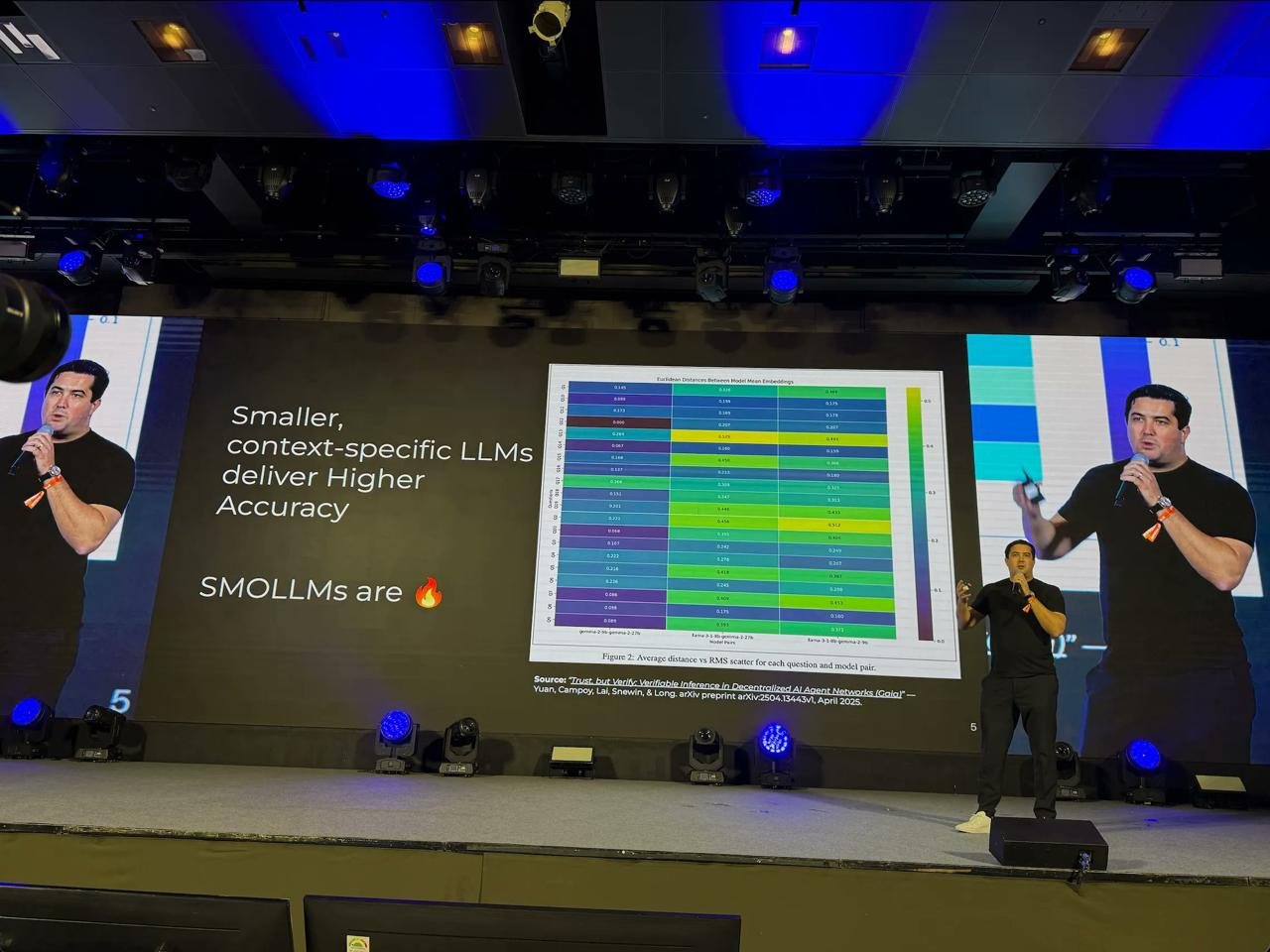
Specialization, not model size alone, is where open systems can win.
Think about an e-commerce merchant. Their real edge is context no marketplace can see — live inventory, true margins, what actually sells together, which SKUs to push this week. As shopping agents become the buyers, that merchant runs a node that lets a buyer’s agent check fit, availability, and price in real time, and earns on every query that converts — instead of renting that visibility back from a platform that owns the customer.
The same logic runs for a DeFi trader who’d rather sell access to a signal node that nets $1,000 than watch someone burn a hundred hours rebuilding it. A professor monetizing their knowledge as it moves across AI systems.
A doctor could run a private local model on hardware they control and share inference with patients inside a secure, permissioned environment. None of these people should have to route every query through a frontier provider. They should be able to run their own node, earn from their knowledge, and participate in a network that rewards specialization over scale.
Gaia v2: An Open Proposal
Gaia v2 is on the table, but it is a proposal rather than an approved plan. I brought it to the Foundation in my advisory role on the Technical Security Council, and we have not reached alignment with the Labs. That decision is theirs to make.
The proposal is the natural next step the original node was always reaching for: turning the 710,000+ inference nodes into agentic nodes — active memory, MCP discoverability, x402 earnings, verifiable on-chain identity — with node v2, domains v2, workspaces, and private, permissioned environments where nodes discover, talk to, and pay one another directly. The work is shovel-ready and the runtime to build it exists. We’re ready whenever they are.
What’s Next for Me
I’m full-time on XO (xo.builders) — the runtime where agents go to work. It’s a separate company, with its own team and its own backers, and it’s where my focus lives for the foreseeable future. The bet is simple: building an agent is easy now; running fleets of them in production is not. Agents are employees now — they onboard, they offboard, and almost no one has answered what data an agent gets access to or what it’s allowed to leave with.
Organizations need permissioning, governance, and payment rails just to let swarms collaborate safely, and that infrastructure mostly doesn’t exist yet. XO is built for it: open, composable, and designed so your team owns its context and can move its whole stack as the industry shifts under us. Shashank is advising, focused on verticalizing agentic orgs for enterprises and embedding XO where real companies operate. A dedicated piece on what we’re shipping at XO is coming; for now, the docs live at docs.xo.builders.
EVM Systems remains the commercial arm for Gaia and activates once the Foundation has the capital to fund commercial execution. Until then, my focus is XO. I’m staying close to Gaia as an advisor and open-source contributor, carrying the v2 proposal through the Technical Security Council. I haven’t sold a token, and I’m not going anywhere as a believer.
|Build the future with us:
To Everyone Who’s Been Here
To the 710,000 node operators who kept this network running. To the 110+ partners who integrated before anyone else believed the thesis. To the OpenClaw builders, the developers running inference on hardware they own, and the investors and advisors who took the bet early.
Thank you. The mission continues. Just from a few different seats now.
Onward.
— Matt Wright
Advisor, Gaia Foundation
Co-founder, evmsystems.ai