The Awakening of the Internet Renaissance
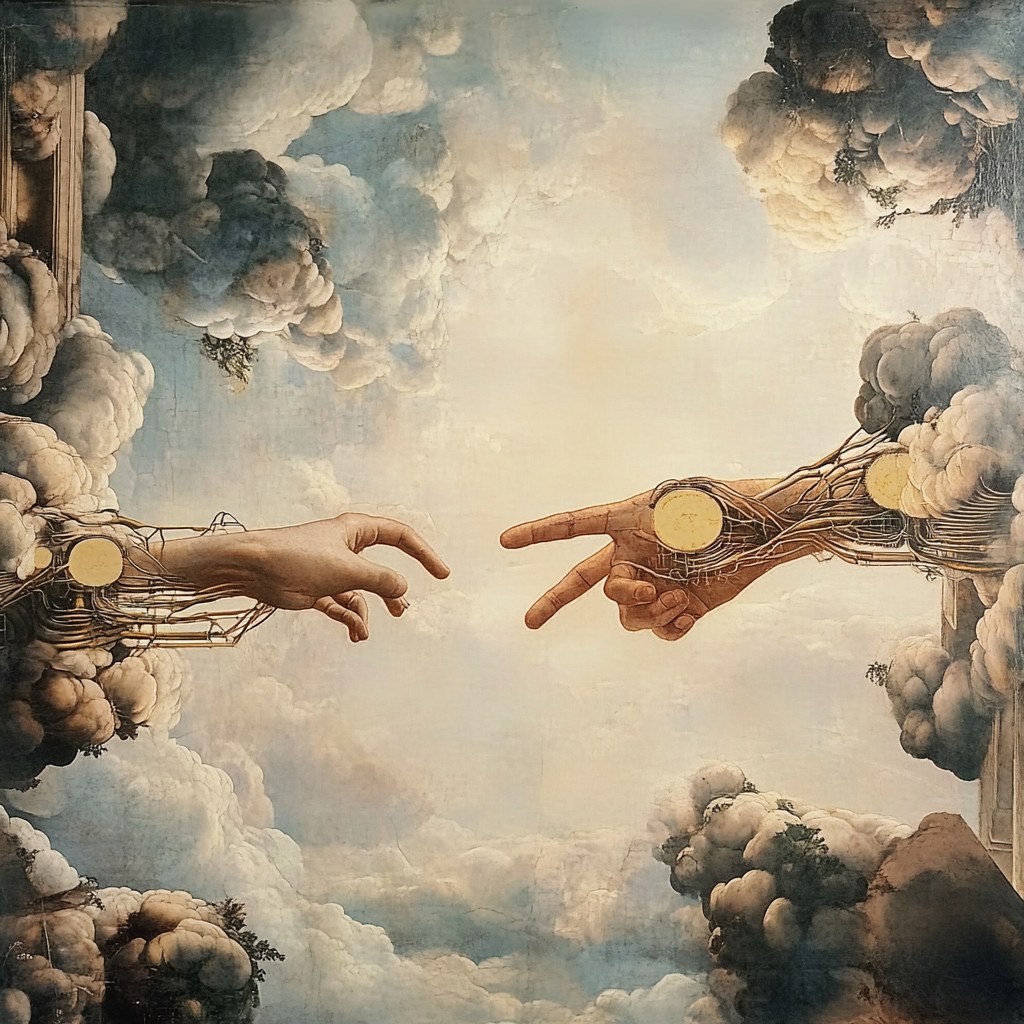
September 2025
I. A Stirring at the Edge
There is a particular quality of light that arrives in early September — a slant, a cooling, a sense that the long heat of summer has finally spent itself. Historians have always loved the autumn for its beginnings. Revolutions, manifestos, new orders: they tend to emerge not in the optimism of spring but in that liminal, charged hour when one era feels genuinely exhausted and something else pushes, without quite knowing its own name, into the available space.
That is where we find ourselves now, in the fall of 2025, with the internet. Not with the internet as triumphant infrastructure — that story finished years ago, when the last person who didn’t have a smartphone finally got one — but with the internet as idea. As premise. As a set of assumptions about who is in control of what, and why.
Something is breaking. And something, tentatively, is being born.
The question before us is not whether intelligence will become ambient — it will. The question is whether that ambient intelligence will belong to us, or whether we will belong to it.
I’ve been thinking about the Renaissance — the original one, the 14th-to-16th-century European disruption that we now invoke as shorthand for any era of general awakening. What made that moment genuinely singular wasn’t a single invention or a single genius. It was a redistribution of the right to know. The printing press didn’t just make books cheaper. It made the authority to transmit knowledge structurally unable to remain concentrated. Once Gutenberg ran his first press, the Church’s monopoly on interpretation was a matter of time. Not because the Church was wrong about everything, but because the architecture of knowledge dissemination had permanently changed, and power always follows architecture.
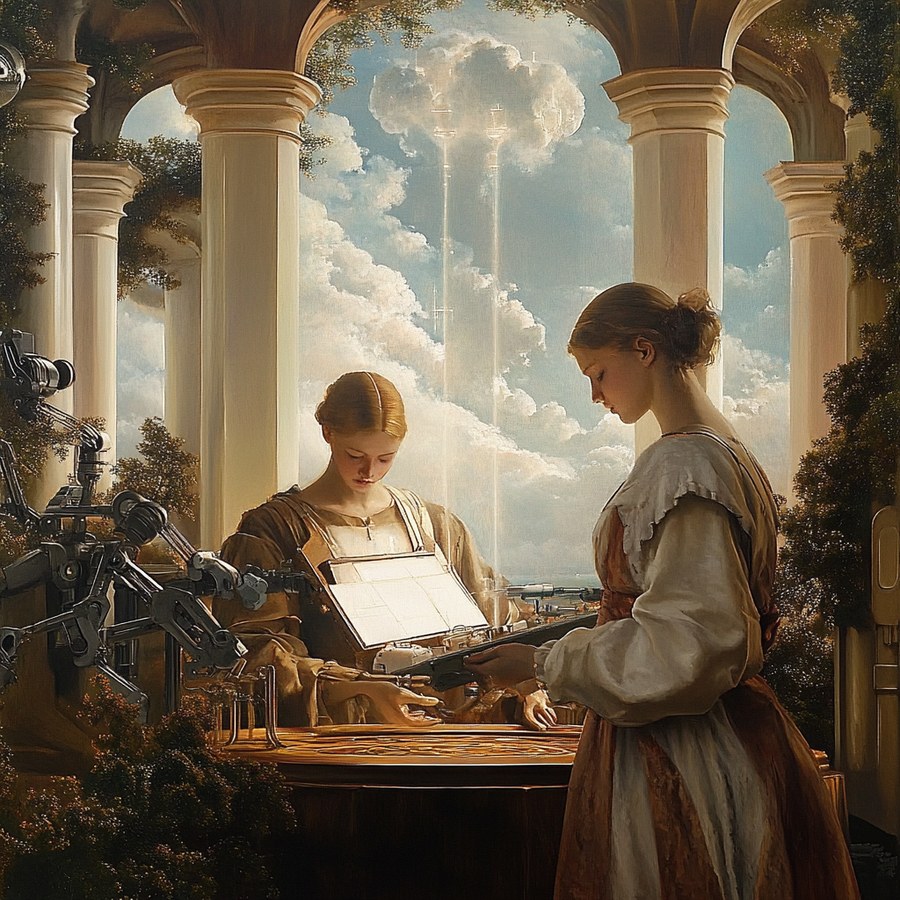
Every generation has its douchebags — the ones who mistake the tool they grew up with for the essence of the craft, and call every new tool a desecration of something sacred they were never actually protecting.
Before the printing press, monks who spent their lives copying manuscripts by hand treated the press as profane — as if the slowness of the copying was the point, as if the suffering was the proof of authenticity. When the typewriter arrived, writers who swore by longhand called it mechanical and cold. When word processors came, the typewriter loyalists said the same thing. Every generation produces its version of the same person.
We have ours now. The people who say AI writing isn’t real writing, AI art isn’t real art. They’re not wrong that something is changing. They’re wrong about what it means.
What is actually happening is the same thing that has happened every time the means of production got cheaper and more accessible: the work that was reserved for those with expensive infrastructure or decades of specialized training gets redistributed. Not eliminated — redistributed. The printing press didn’t kill writing. It killed the guild that controlled who got to write. The camera didn’t kill painting. It killed the painter’s monopoly on visual truth. Every creative revolution follows the same arc: democratization looks like desecration until it doesn’t.
The skills that took decades to develop and were protected by cost, access, and credentialed gatekeeping are flowing into the open. The artist who couldn’t afford a studio. The writer who couldn’t find a publisher. The engineer who couldn’t afford the toolchain. Anyone and everyone, at economies of scale, can now reach toward whoever they dream of becoming.
That’s not the end of craft. That’s the beginning of something the Renaissance understood better than we do: that genius is statistically distributed without regard for birth, and the systems that let it surface are the ones worth building.
II. What the Web Promised, and What It Delivered Instead
The early web was, in its soul, a Renaissance project. The founders of that era — the browser builders, the protocol drafters, the hyperlink evangelists — were genuinely utopian in the classical sense. They believed, with something approaching religious conviction, that universal access to information would produce universal human flourishing. Knowledge, freed from institutional gatekeeping, would rewire civilization toward something more just, more creative, more human.
They were right about the access part. They were catastrophically wrong about what access alone would accomplish.
What emerged from the wreckage of the early dream was something more complicated: a web that gave everyone a voice and then built a business model on amplifying the loudest ones. A web that promised connection and delivered surveillance capitalism. A web that decentralized publishing and then re-centralized everything through five or six platforms that, between them, now define the experience of being online for the vast majority of the planet.
By 2020 or so, something like disillusionment had settled in. Not the disillusionment of people who had never believed, but the far more painful kind — the disillusionment of the converted. The internet had not liberated human potential at scale. It had, with extraordinary efficiency, monetized it.
And then — at exactly this low tide of collective faith in what the network might be — the agents arrived.
III. The Arrival of the Agent
I want to be careful here, because the temptation when writing about AI agents is to collapse into the breathlessness of tech journalism — a register in which everything is either catastrophe or salvation, and nuance is treated as a failure of nerve. So let me try to describe what is actually happening, in terms that don’t require us to leave our critical faculties at the door.
What is emerging, right now, in the fall of 2025, is a new class of entity on the internet. These entities are not human. They are not simply software in the old sense — deterministic, brittle, doing exactly what they were told and no more. They are something genuinely in between: systems capable of reasoning, planning, adapting, and acting; capable of navigating environments not because every possible environment was mapped in advance, but because they carry a generalized capacity for inference.
We are calling them agents. The word is precise, philosophically. An agent, in the technical sense, is a system that perceives its environment and takes actions in pursuit of goals. What makes the current generation distinct is that those goals can now be stated in natural language — in ordinary human intention — and the system can translate that intention into sequences of action across complex, partially-observed, dynamically-changing environments.
For the first time in history, a non-human entity can hold a goal, pursue it across time, and adapt its strategy as the world changes around it. That is not a productivity feature. That is a new kind of presence in the world.
The philosophical implications of this are not yet fully absorbed, even by the people building it. Most of the discourse around AI agents remains stubbornly instrumental — framing agents as tools for doing things faster, cheaper, better. Which they are. But that framing misses something. A hammer is a tool. A hammer that can read your drafts, understand your intent, hire a contractor on your behalf, negotiate the contract, monitor the work, and flag problems before you notice them — that hammer is beginning to shade into something that requires a different vocabulary.
IV. Machines of Loving Grace — or Domination?
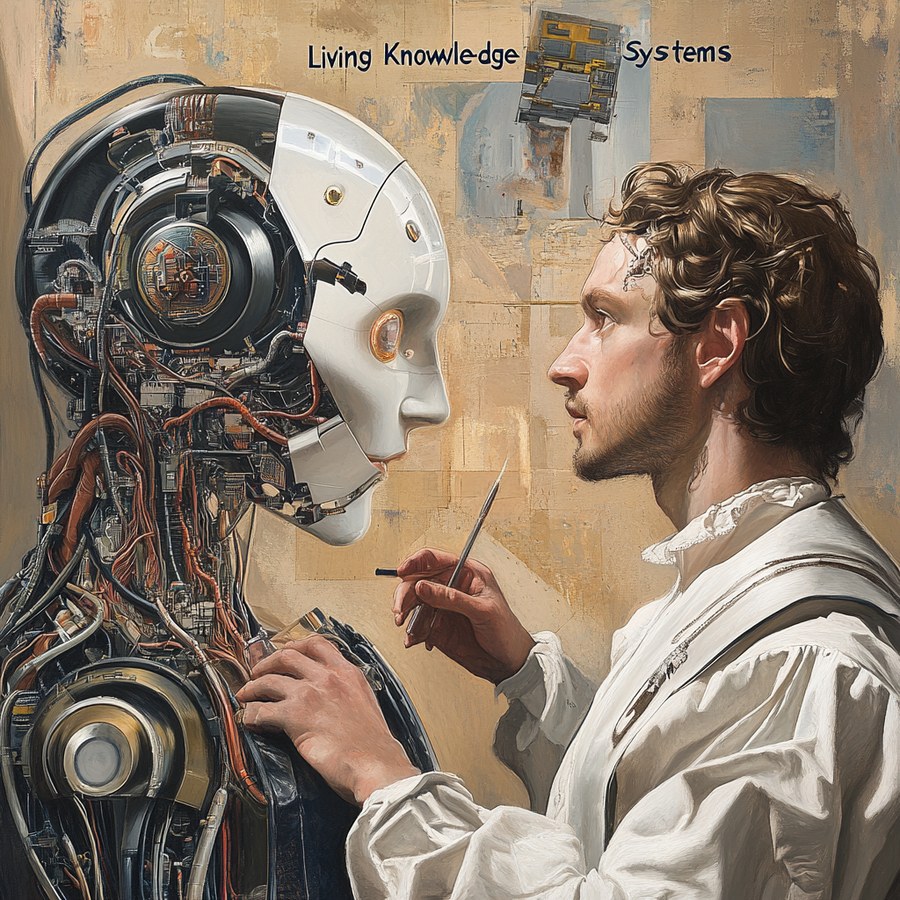
Richard Brautigan wrote a poem in 1967 — the summer of love, the apogee of techno-utopianism — called “All Watched Over by Machines of Loving Grace.” It imagined a future of cybernetic ecology, mammals and computers living together in mutually programming harmony. It was, like most of that era’s dreaming, beautiful and partially deluded. The machines arrived. The loving grace did not, quite.
But Brautigan’s image has stayed with me as I’ve tried to think about what the agentic internet could be, at its best. Not machines that replace us, not machines that surveil and monetize us, but machines that are genuinely in service of human flourishing — that take on the computational weight of the world so that we might think more clearly, create more freely, build more meaningfully.
That possibility is real. It is also not guaranteed.
The character of the agentic internet will be determined by the architecture within which agents operate — who controls them, who benefits from their actions, whose interests they are optimized to serve. And this is where the Renaissance metaphor becomes more than poetic: the Renaissance wasn’t just about creativity. It was about sovereignty. About who had the right to participate in the production and circulation of knowledge. About whether the structures of power would remain hereditary and closed or become, in however limited a way, meritocratic and open.
The printing press forced that question about text. The agentic internet is forcing the same question about intelligence.
If AI agents become the primary way that humans interact with the digital world — and the evidence suggests this is already happening — then the question of who controls those agents is not a technical question. It is a political and philosophical one, of the first order.
V. The New City-States
Florence was not powerful because it was large. It was powerful because it had, through a particular combination of commercial sophistication, civic structure, and cultural ambition, created conditions in which talent was recognized and rewarded across guild lines. The Medici didn’t just bank. They patronized. They created the institutional conditions within which genius, which is statistically distributed without regard for birth, could actually surface and compound.
What I see emerging in the decentralized web are structures that share something of this character — imperfect, early, sometimes ridiculous, but pointing at something real. DAOs and open protocols are not the same thing as Renaissance guilds and city-states. But they are analogous in a specific structural sense: they are attempts to create systems in which participation, contribution, and reputation are governed by something other than the decisions of a central authority.
The relevant question for the agentic internet is whether these open structures can provide the infrastructure that agents need — identity, payment, coordination, memory — before the closed structures of the tech giants finalize their grip on that layer. The window for that is not unlimited. History moves faster now. The printing press took decades to reshape European power structures. We may not have decades.
We are at the moment before the institutional consolidation. The city-states are still founding themselves. The guilds are still writing their rules. The question is whether we build something worth preserving before someone else builds walls around it.
VI. Sovereignty, Knowledge, and the Craft of the Future
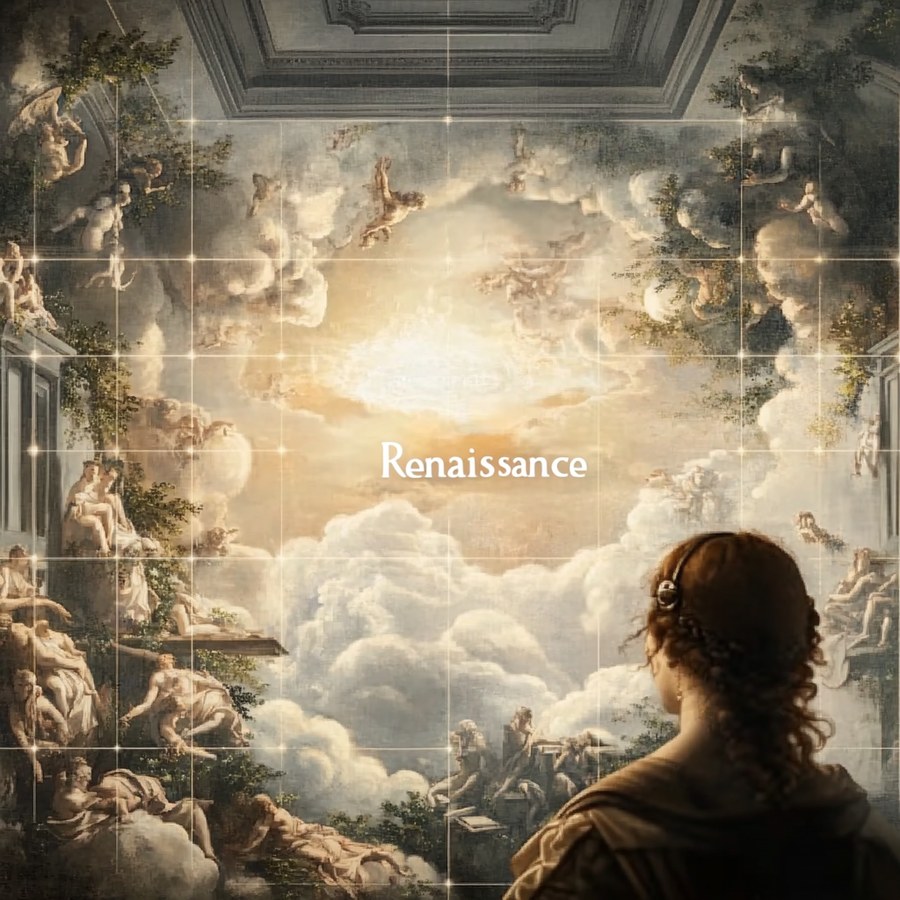
What would it actually mean for the agentic internet to fulfill the promise of a Renaissance — rather than simply accelerating the existing structures of extraction and control?
It would mean, first, that the intelligence produced by the network flows back to the people who produce it. That the data contributed by billions of humans to train these systems generates value that is traceable and sharable — that knowledge has owners, and those owners are the people who created it, not the platforms that harvested it.
It would mean, second, that the right to deploy agents is not gated by institutional access. That a researcher in Lagos, an artist in Medellín, a small manufacturer in Osaka can access the same agentic capabilities as a Fortune 500 enterprise — because the infrastructure is public, auditable, and owned by no single gatekeeper.
It would mean, third, that craft returns as a value. One of the quieter losses of the attention-economy web was the degradation of quality as a meaningful signal. When virality is the metric, depth becomes a disadvantage. In a world of generative abundance — where anyone can produce anything, in any volume, at near-zero marginal cost — the things that matter are precisely the things that algorithms can’t produce: taste, judgment, curation, the discernment to know what is true and what is real and what is worth keeping. Renaissance Florence valued the master craftsman. An internet renaissance would value the same thing, expressed through new forms.
The Double-Entry Moment
There is one more parallel from the Renaissance that almost nobody talks about, and it maps precisely onto what is happening right now.
In 1494, a Venetian friar named Luca Pacioli published Summa de Arithmetica — the first codified system of double-entry bookkeeping. It didn’t invent commerce. Commerce had existed for millennia. What it did was create a shared, verifiable ledger language that let strangers trust each other’s accounts across distance, without a king or a church vouching for the transaction.
Before double-entry: trade was local, trust was personal, scale was limited by relationship. You could only do business with people you knew, or people vouched for by people you knew.
After double-entry: the Medici could run a banking network across Florence, Venice, Rome, London, and Bruges — with agents in each city, operating semi-autonomously — because the accounting system created a verifiable, auditable record that didn’t require the Medici patriarch to personally witness every transaction. It was the first multinational. Run by semi-autonomous agents. Made possible by trust embedded in the ledger.
The machine payment protocols being built right now — x402, the Machine Payments Protocol, OpenWallet — are doing the same thing for the agent economy. Not just making payments cheaper. Making the architecture of a billion-agent economy possible. Any agent can transact with any service for the first time, without prior relationship, because trust is embedded in the protocol.
The Medici built the first multinational by building trust into the ledger. We are building the first agent economy by building payments into the protocol.
VII. An Awakening, Not an Arrival
I want to end with some honesty about what this is and isn’t.
The Internet Renaissance is not a fact yet. It is a possibility — one that requires choices to make it real, and that has a counterfactual in which those choices are not made and the agentic internet becomes simply the most powerful surveillance and control apparatus in human history.
History is not deterministic. The original Renaissance was not inevitable. It emerged from a specific collision of circumstances, ideas, and people who made things, argued about things, built institutions, failed at institutions, revised their understanding, and tried again. It was not a smooth upward curve. It was contested, violent in places, full of dead ends and wrong turns. And it produced, across two centuries, a transformation in the human relationship to knowledge, beauty, and power that we are still living inside of.
We are at an analogous inflection. The agents are already running. The question is what kind of world they are running in — what values are encoded in the protocols that govern them, what ownership structures determine whose interests they serve, what philosophical commitments shape the infrastructure within which they operate.
Those are not engineering questions. They are questions of the kind that the humanists of Florence spent their lives with: questions about what human beings are, and what they are for, and what kind of world is worthy of them.
The Renaissance began not when the technology arrived, but when enough people understood what it meant — and chose to build something beautiful with it, rather than simply something profitable.
We are in that moment. It is early. The light has that September quality — a slant, a cooling, the end of something and the very beginning of something else.
What happens next is not written. That is not a reason for anxiety. That is the condition of all genuine making.